An SEO content strategy helps businesses identify what their target audience searches for, create relevant content, and optimize website pages to improve organic visibility. Instead of publishing articles based on random topics, it connects keyword research, search intent, content planning, on-page optimization, and performance tracking into one coordinated process.
Whether you run a startup, manage an e-commerce website, or operate an established business, a well-planned content strategy can help build topical authority and attract potential customers through search engines. If you are looking for practical ways to attract more visitors, explore our guide on how to get website traffic to discover strategies for increasing website visibility through multiple marketing channels.
In this guide, we explain how to build an SEO content strategy that supports long-term organic traffic growth, improves search visibility, and creates meaningful opportunities for business growth.
What Is an SEO Content Strategy?
An SEO content strategy is a structured plan for researching, creating, optimizing, publishing, and managing website content to improve its visibility in organic search results.
It combines search engine optimization with content marketing to ensure that every article, landing page, and website resource serves a specific audience need and business objective.
A successful strategy focuses on three important areas:
- Audience relevance: Creating content that answers your target audience’s questions and solves their problems.
- Search visibility: Optimizing content around relevant keywords, search intent, and related topics.
- Business growth: Guiding visitors toward meaningful actions such as inquiries, purchases, and service inquiries.
The objective is not simply to increase website traffic but to attract relevant visitors who are more likely to engage with your business.
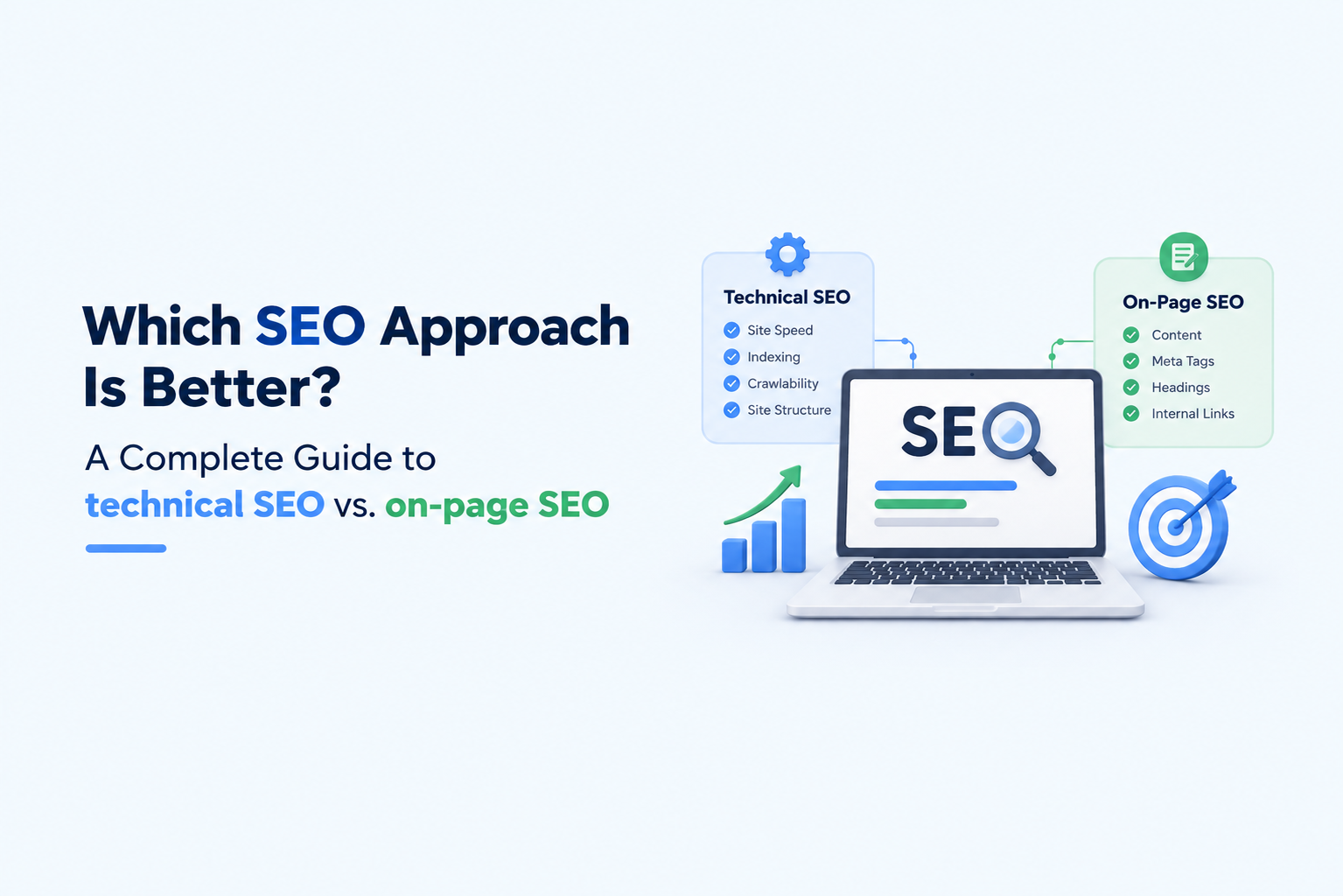
A strong content strategy also depends on technical website performance. Understanding the differences between technical SEO vs on-page SEO can help businesses identify how content optimization, website structure, crawling, and indexing work together to support organic visibility.
How to Build an SEO Content Strategy Step by Step
1. Define Your Content Marketing Goals
Before creating content, establish what you want your website to achieve. Different businesses have different priorities, and your content strategy should reflect them.
For example, an e-commerce website may prioritize product visibility and online sales, while a B2B company may focus on generating qualified inquiries through informative articles and service pages.
Your goals could include:
- Increasing organic website traffic.
- Improving rankings for relevant industry keywords.
- Building topical authority in your niche.
- Generating qualified leads and inquiries.
- Supporting product and service page visibility.
- Increasing engagement and conversions.
Set measurable objectives so you can evaluate whether your content activities contribute to business growth.
2. Understand Your Target Audience and Search Intent
Understanding your audience is essential for creating content that performs well in search results. Identify their challenges, interests, questions, and decision-making process.
Search intent explains what users expect to find when they enter a particular query into a search engine. It generally falls into four categories:
| Search intent | What users want | Content example |
| Informational | Learn something. | What is SEO? |
| Navigational | Find a specific website. | Buzzing Brands |
| Commercial | Compare available options. | Best SEO agencies in Bangalore |
| Transactional | Take an action or purchase. | SEO services in Bangalore |
For example, someone searching for “what is SEO content writing” is looking for information, while someone searching for “SEO content writing services” may be evaluating service providers.
Search intent also varies by industry. A restaurant business targeting local customers may focus on keywords such as “best restaurants in Bangalore” or “family restaurants near me.” Understanding industry-specific search behavior helps businesses identify relevant keyword opportunities. Explore our guide to SEO for restaurants for practical examples of keyword targeting and local content optimization.
3. Conduct Keyword Research
Keyword research is one of the most important components of an SEO content strategy. It helps you discover the phrases people use when searching for products, services, and information related to your business.
Use tools such as Google Keyword Planner, Google Search Console, Ahrefs, or Semrush to identify relevant keywords.
Focus on:
- Primary keywords that represent your main topic.
- Secondary keywords that support the primary subject.
- Long-tail keywords that target specific search queries.
- Question-based keywords that address audience concerns.
- Location-based keywords for local businesses.
For example, if your primary keyword is “SEO content strategy,” related keywords could include:
- SEO content planning
- Content strategy for SEO
- SEO content marketing
- Organic traffic growth
- Keyword research for content
- Content optimization techniques
Group related keywords according to search intent rather than creating separate articles for every minor keyword variation.
4. Create Topic Clusters to Build Topical Authority
Topic clusters help organize related website content around a central subject. This approach makes it easier for users to explore related information and helps search engines understand the relationship between your pages.
A typical topic cluster includes a pillar page supported by several related articles.
For example, a digital marketing agency could create a content cluster around SEO:
- Pillar page: Complete Guide to Search Engine Optimization
- Supporting article 1: On-Page SEO Techniques
- Supporting article 2: Technical SEO Best Practices
- Supporting article 3: SEO Content Writing Guide
- Supporting article 4: Link Building Strategies
- Supporting article 5: Local SEO for Businesses
Connect these pages using relevant internal links. This creates a structured content ecosystem instead of a collection of unrelated blog posts.
Topic clusters can also be adapted to different industries. For instance, an e-commerce website can create interconnected content around products categories, buying guides, product comparisons, and shopping advice. Businesses looking to strengthen their online sales can explore e-commerce digital marketing services to understand how different marketing activities support e-commerce growth.
5. Develop a Consistent Content Calendar
A content calendar helps organize your publishing activities and ensures that important topics receive attention.
Plan your content based on keyword opportunities, search demand, seasonal trends, business priorities, and available resources.
Your content calendar should include:
- Blog topic and target keyword.
- Search intent and target audience.
- Content format and proposed headings.
- Assigned writer or content team.
- Publication date.
- Internal linking opportunities.
- Content update schedule.
Consistency is important, but publishing frequency should never come at the expense of content quality. Prioritize useful, well-researched articles over producing large volumes of repetitive content.
6. Create High-Quality, Search-Optimized Content
Once your topics and keywords are finalized, focus on creating content that provides genuine value.
A well-optimized article should have a descriptive H1, logically organized H2 and H3 headings, a clear introduction, informative sections, and a useful conclusion.
Include your primary keyword naturally in important locations, such as the page title, H1, introduction, relevant subheadings, and meta description.
However, avoid keyword stuffing. Use related terms naturally and explain concepts clearly.
To strengthen content quality:
- Provide actionable information and relevant examples.
- Address common audience questions.
- Include original insights and practical recommendations.
- Use short paragraphs, lists, and descriptive headings.
- Support factual claims with reliable sources.
- Include relevant images with descriptive alt text.
Creating optimized content consistently requires a combination of keyword research, content expertise, and SEO knowledge. Businesses that need professional support can explore what to consider when choosing the best SEO company in Bangalore, including industry experience, content capabilities, and SEO expertise.
Google’s guidance emphasizes creating helpful, reliable, people-first content rather than content written primarily to manipulate search rankings.
7. Optimize Existing Content Regularly
An effective SEO content strategy does not stop after publishing an article. Existing content needs regular evaluation to maintain accuracy, relevance, and usefulness.
Use Google Search Console to identify pages receiving impressions but relatively few clicks, declining organic traffic, or opportunities to improve keyword coverage.
Review the following elements:
- Update outdated statistics and information.
- Improve titles and meta descriptions.
- Add relevant sections to address missing search queries.
- Strengthen internal links.
- Improve content readability.
- Remove outdated or inaccurate information.
Make meaningful improvements based on user needs and performance data rather than changing publication dates without substantial updates.
8. Build a Strong Internal Linking Structure
Internal linking connects relevant pages across your website and helps visitors discover additional information.
For example, a blog about content marketing can link to related articles about SEO, keyword research, website development, and digital marketing services.
Use descriptive anchor text that clearly communicates what the destination page offers.
A good internal linking structure can improve website navigation, help search engines discover content, and direct visitors toward relevant service pages.
9. Optimize Content for AI Search and Answer Engines
Search behavior is evolving beyond traditional search engines. Users increasingly turn to AI-powered platforms such as ChatGPT, Claude, and Perplexity to research topics, compare solutions, and find recommendations.
To improve your content’s usefulness across traditional and AI-assisted discovery:
- Answer important questions directly.
- Use descriptive headings and clear explanations.
- Include accurate facts, relevant examples, and reliable references.
- Structure information using lists, tables, and FAQs where useful.
- Demonstrate expertise through original insights and practical experience.
- Keep important information accessible in crawlable website content.
While organic content helps businesses build long-term visibility, search engine marketing can complement these efforts by providing additional opportunities to reach users actively searching for relevant solutions. Businesses interested in combining organic and paid search can explore how a search engine marketing company in Bangalore can help improve online visibility through paid search campaigns.
There is no guaranteed formula for appearing in AI-generated answers. However, clear, trustworthy, well-structured content gives both readers and information systems a better understanding of your expertise.
10. Measure SEO Content Performance
Tracking performance helps you understand which content activities are contributing to organic growth.
Use Google Analytics 4 and Google Search Console to monitor important metrics.
| SEO metric | What it measures |
| Organic clicks | Visitors arriving through organic search |
| Impressions | How often pages appear in search results |
| Keyword rankings | Search visibility for target queries |
| Organic conversions | Leads, enquiries, and sales from organic traffic |
| Engagement | How visitors interact with website content |
| Backlinks | Links earned from external websites |
Review performance monthly and identify opportunities to improve underperforming pages, expand successful topics, and create new content around relevant search queries.
Traffic and rankings alone do not provide a complete picture of content performance. Businesses should also understand whether their marketing activities contribute to inquiries, conversions, and revenue. Learn how to measure digital marketing ROI to evaluate campaign effectiveness and make more informed marketing decisions.
Common SEO Content Strategy Mistakes to Avoid
Even well-planned content campaigns can underperform when businesses overlook important SEO practices.
Avoid these common mistakes:
- Keyword stuffing: Repeating keywords unnaturally can affect readability and content quality.
- Ignoring search intent: Content that does not match what users expect may struggle to satisfy their needs.
- Publishing duplicate topics: Creating multiple pages targeting the same search intent can lead to keyword cannibalization.
- Neglecting internal links: Disconnected content makes website navigation and content discovery more difficult.
- Focusing only on traffic: High visitor numbers do not necessarily translate into qualified leads or sales.
- Ignoring content updates: Outdated information can reduce the usefulness and accuracy of your website.
Another common mistake is depending entirely on organic search for website traffic. Although SEO supports long-term growth, businesses can complement their content strategy with paid campaigns to reach relevant audiences and generate additional visibility. Discover how a PPC company in Bangalore can help increase sales and leads through targeted advertising and campaign optimization.
A successful strategy focuses on relevance, quality, technical accessibility, and continuous improvement.
Conclusion
Building an effective SEO content strategy requires more than keyword research and regular blog publishing. It involves understanding your audience, identifying search intent, organizing related topics, creating valuable content, and measuring performance consistently.
Businesses that approach content strategically can develop stronger topical relevance, improve organic search visibility, and attract visitors who are genuinely interested in their products or services.
If you are exploring professional support to strengthen your digital presence, our guide to the 10 best digital marketing agencies in Bangalore can help you understand the services and expertise available in the market.
At Buzzing Brands, we understand that effective content marketing connects SEO, audience research, and business objectives. Our approach focuses on creating meaningful digital experiences that help businesses improve online visibility and build a stronger digital presence.
Frequently Asked Questions
1. What Is an SEO Content Strategy?
An SEO content strategy is a structured plan for researching, creating, optimizing, and publishing website content to improve organic search visibility, attract relevant visitors, and achieve business objectives.
2. How Do I Create an Effective SEO Content Strategy?
Start by defining your business goals, understanding your audience, conducting keyword research, analyzing search intent, developing topic clusters, creating a content calendar, and regularly monitoring performance.
3. How Does an SEO Content Strategy Improve Organic Traffic?
It helps businesses target relevant search queries, create useful content, improve internal linking, and strengthen website relevance. Over time, these activities can improve search visibility and attract more qualified organic visitors.
4. How Often Should I Publish SEO Content?
There is no fixed publishing frequency that guarantees better rankings. Choose a realistic schedule based on your resources and business goals, prioritizing originality, relevance, and content quality.
5. How Long Does an SEO Content Strategy Take to Show Results?
SEO results depend on competition, website authority, content quality, technical performance, and consistency. Some pages may gain visibility within weeks, while meaningful and sustainable organic growth often takes several months.