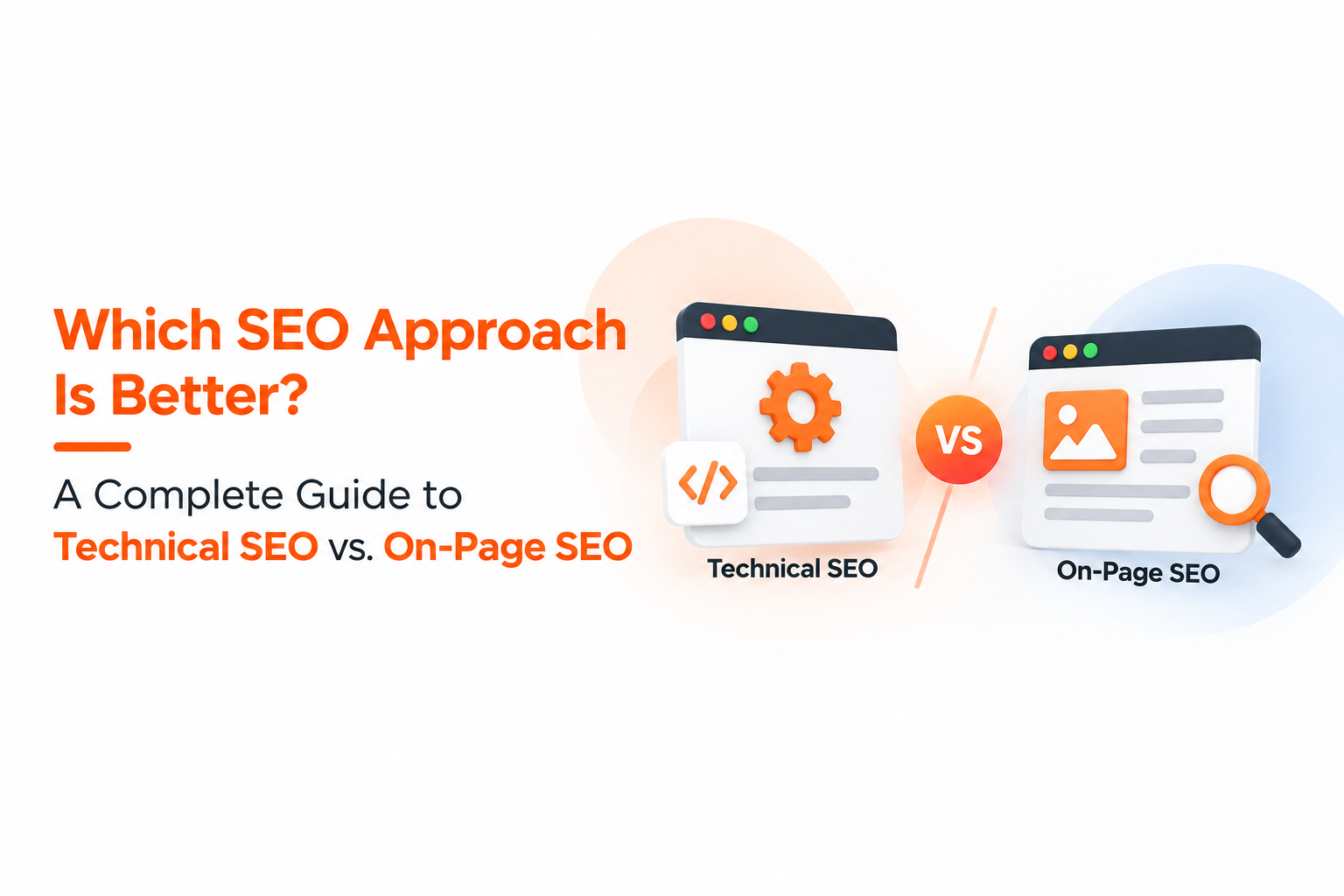
Search engine optimization is no longer just about adding keywords to a webpage. A successful SEO strategy requires a website that search engines can crawl and understand, combined with content that answers users’ questions effectively. This is where technical SEO vs on-page SEO becomes an important discussion for businesses looking to improve their visibility on Google.
While both approaches support better organic search performance, they focus on different parts of a website. Technical SEO improves the technical foundation of a website, while on-page SEO focuses on the content and elements users see on individual pages.
What Is Technical SEO?
Technical SEO is also closely connected with website development. A well-structured website can make it easier for search engines to access important pages and understand the relationship between different sections of the site. Businesses can also explore how web development enhances brand visibility when planning improvements to their website infrastructure.
Technical SEO can include:
- Website crawlability and indexability
- XML sitemap optimization
- Robots.txt configuration
- HTTPS and website security
- Canonical tags
- Website speed and Core Web Vitals
- Mobile usability
- URL structure
- Redirect management
Website performance is another important consideration. Slow-loading pages can affect user experience and may create friction for visitors. Understanding page speed loading can help businesses identify performance improvements that support a stronger website experience.
That is why technical SEO acts as the foundation of your organic search strategy.
What Is On-Page SEO?
On-page SEO focuses on optimizing individual webpages so that both users and search engines can clearly understand what the page is about.
Important on-page SEO elements include:
- Primary and secondary keywords
- SEO-friendly title tags
- Meta descriptions
- H1, H2, and H3 headings
- Search intent
- Content structure
- Internal linking
- Image optimization and alt text
For instance, if you are creating a page about digital marketing services, on-page SEO would involve structuring the content around relevant search queries, answering common customer questions, optimizing headings, and creating clear internal links to related pages.
Businesses that are new to search optimization can also review these basics of SEO in digital marketing to understand how different SEO activities contribute to organic visibility.
Technical SEO vs On-Page SEO: What Is the Difference?
The easiest way to understand technical SEO vs on-page SEO is to look at what each approach tries to improve.
| Factor | Technical SEO | On-Page SEO |
| Primary focus | Website infrastructure | Page content and elements |
| Main objective | Improve crawling and indexing. | Improve relevance and usefulness. |
| Keywords | Indirect role | Major role |
| Content | Technical accessibility | Content quality and structure |
| Page speed | Important | Indirectly relevant |
| Internal links | Technical and structural | Content navigation |
| Structured data | Commonly included | Supports content understanding |
| Search intent | Indirect | Core consideration |
| Mobile optimization | Important | Supports user experience |
| Technical errors | Primary concern | Secondary concern |
In simple terms, technical SEO makes your website accessible to search engines, while on-page SEO helps search engines understand the relevance and value of individual pages.
How AI Is Changing SEO
Search is also evolving as artificial intelligence becomes increasingly integrated into digital marketing and search experiences.
AI-powered tools can assist marketers with activities such as keyword research, content analysis, topic discovery, competitor research, and workflow automation. Businesses interested in the changing search landscape can explore AI in digital marketing for additional insights into how artificial intelligence is influencing marketing strategies.
AI does not eliminate the need for technical or on-page SEO. Instead, it makes it increasingly important for websites to provide clear, useful, well-organized information that can be understood by both users and search systems.
Technical SEO vs On-Page SEO: Which Should You Do First?
When comparing technical SEO vs on-page SEO, it is tempting to ask which one should come first. If your website has serious technical problems, fixing those issues should be a priority. There is little value in spending significant resources producing new content if important pages cannot be crawled or indexed correctly.
On the other hand, if your website is technically healthy but has thin, outdated, poorly structured, or irrelevant content, improving on-page SEO may provide greater opportunities.
A practical SEO process can look like this:
Step 1: Audit technical SEO
Identify crawlability, indexability, speed, mobile, security, redirects, canonicalization, and other technical issues.
Step 2: Research keywords and search intent.
Understand what your target audience searches for and what type of information they expect.
Step 3: Optimize existing pages
Improve titles, headings, content, internal links, URLs, images, and other page elements.
Step 4: Create useful new content
Build landing pages, service pages, guides, blogs, and supporting resources around relevant topics.
Step 5: Monitor performance
Use tools such as Google Search Console and analytics platforms to identify indexing problems, search queries, traffic changes, and content opportunities.
SEO Services for Businesses
Implementing technical and on-page SEO effectively can require ongoing analysis, especially for businesses managing competitive local markets.
For companies targeting customers in Bangalore, a structured local SEO strategy can help align website optimization with location-based search behavior. Businesses can explore SEO services in Bangalore to understand how SEO activities can be applied to a local market.
Whether the objective is improving rankings for service pages, increasing organic traffic, strengthening local visibility, or building topical authority, technical and on-page SEO should work together rather than being treated as completely separate activities.
Conclusion
Understanding technical SEO vs on-page SEO is essential for building a website that can perform effectively in organic search.
Technical SEO helps ensure that search engines can crawl, render, and index your website correctly, while on-page SEO helps individual pages communicate relevance, context, and value.
Neither approach should operate independently. A technically sound website with weak content can struggle to attract relevant visitors, while excellent content can underperform when technical problems prevent search engines from accessing or understanding it.
A balanced SEO strategy is ultimately about making your website easier for search engines to understand and people to use. Buzzing Brands helps businesses build stronger digital visibility through practical SEO, digital marketing, website development, and other digital solutions tailored to their growth goals.
FAQs
1. What is the difference between technical SEO and on-page SEO?
Technical SEO focuses on crawling, indexing, website performance, security, and site infrastructure. On-page SEO focuses on content, keywords, headings, internal links, titles, and other page-level elements.
2. Is technical SEO more important than on-page SEO?
Neither is universally more important. Technical SEO provides the foundation for search engines to access your website, while on-page SEO helps individual pages satisfy search intent and communicate relevance.
3. What are the main elements of technical SEO?
Key elements include crawlability, indexability, XML sitemaps, robots.txt, canonical tags, HTTPS, mobile usability, Core Web Vitals, redirects, structured data, and website architecture.
4. What are the most important on-page SEO factors?
Important factors include search intent, helpful content, title tags, headings, keyword relevance, internal links, descriptive URLs, image optimization, and clear content structure.
5. Can technical SEO and on-page SEO be done together?
Yes. Combining both creates a stronger SEO foundation. Technical SEO helps search engines access and understand your website, while on-page SEO improves the relevance and usefulness of individual pages.