Every business today wants to be found online. But with millions of websites competing for attention, how do you make sure yours stands out? The answer lies in SEO Search Engine Optimisation. Whether you are a startup, a local business, or an established brand, understanding the basics of SEO in digital marketing is no longer optional. It is the foundation on which your entire online presence is built.
SEO is the process of improving your website so that search engines like Google rank it higher on their results pages. The higher you rank, the more people find you organically, without paying for every click.
In this guide, we break down the core fundamentals of SEO in a way that is simple, practical, and actionable, just clear insights you can start applying today.
What Is SEO and Why Does It Matter?
SEO stands for Search Engine Optimisation. At its core, it is the practice of making your website more visible on search engines like Google, Bing, and Yahoo specifically when people search for products, services, or information related to your business.
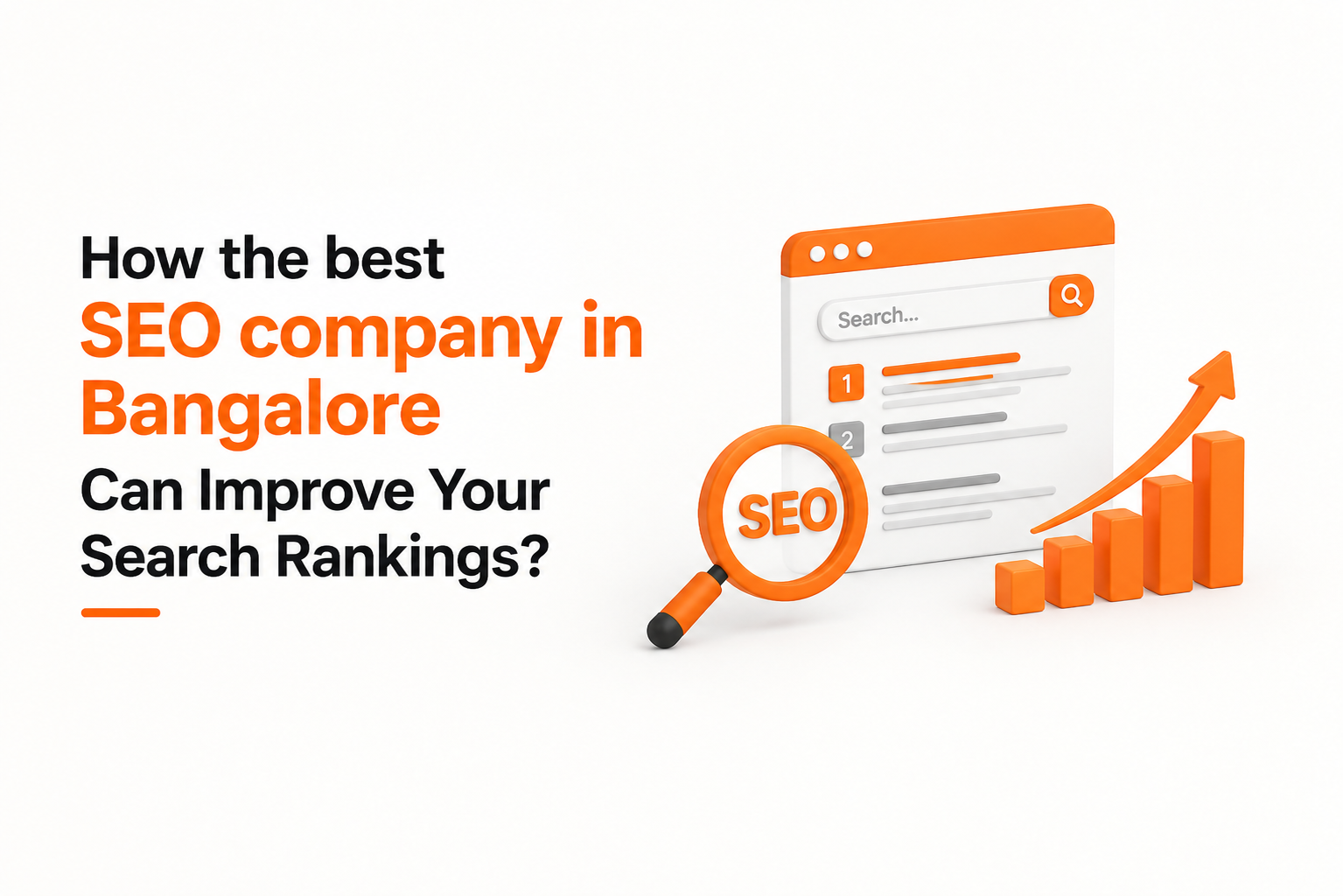
Think of it this way: when a potential customer in Bangalore searches for “best digital marketing agency near me,” Google scans thousands of websites in seconds and decides which ones are most relevant and trustworthy. SEO is what determines whether your website shows up on Page 1 or Page 10 and let’s be honest, most people never scroll past the first page.
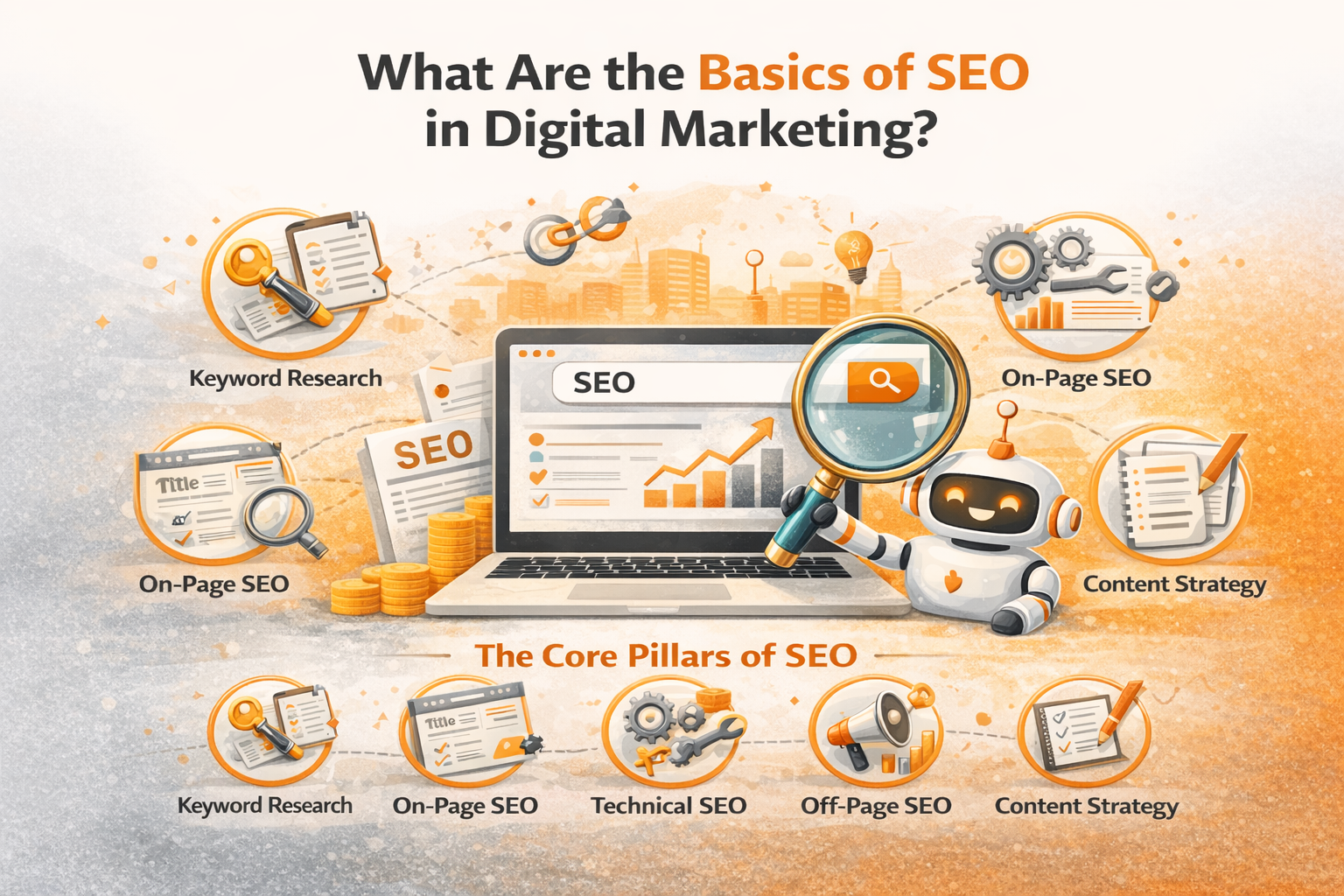
The Core Pillars of SEO Basics
1. Keyword Research
If SEO is the engine, keywords are the fuel. Keyword research is the process of identifying the exact words and phrases your target audience types into search engines. These are the terms you want your website to rank for.
For example, if you run a bakery in Bangalore, keywords like “custom cakes Bangalore,” “best bakery near me,” or “birthday cakes Bangalore delivery” are what your potential customers are searching for.
2. On-Page SEO
On-page SEO refers to all the optimisations you make directly on your web pages to help search engines understand your content and rank it appropriately.
The key elements of on-page SEO include:
Title Tags and Meta Descriptions- Your title tag is the clickable headline that appears on Google’s search results page. It should include your focus keyword and be compelling enough for users to click. The meta description is the short summary below the title; it does not directly affect rankings but significantly influences click through rates.
Header Tags (H1, H2, H3)– Structuring your content with headers helps both readers and search engines navigate your page. Your main heading (H1) should include your primary keyword. Subheadings (H2, H3) break content into digestible sections and naturally incorporate secondary keywords.
URL Structure– Keep your URLs short, descriptive, and keyword rich. A URL like buzzingbrands.in/basics-of-seo performs far better than buzzingbrands.in/page?id=1234.
Content Quality and Keyword Placement- Your content must genuinely answer the user’s question. Include your focus keyword naturally in the first 100 words, throughout the body, and in at least one subheading. Avoid keyword stuffing, write for people first, search engines second.
Image Optimisation– Every image on your website should have an ALT tag, a brief text description that tells search engines what the image shows. This also helps your site appear in Google Image Search.
3. Technical SEO
Technical SEO ensures that search engines can crawl, understand, and index your website without any problems. Even if your content is excellent, technical issues can prevent Google from finding and ranking it.
Key technical basics of seo include:
Website Speed- Google considers page speed a ranking factor. A slow website frustrates users and signals poor quality to search engines. Use tools like Google PageSpeed Insights to check and improve your site’s load time.
Mobile Friendliness- More than 60% of searches now happen on mobile devices. Google uses mobile first indexing, meaning it primarily looks at the mobile version of your site for ranking. Your website must look and perform flawlessly on all screen sizes.
SSL Certificate (HTTPS)- A secure website (one that uses HTTPS rather than HTTP) is a basic ranking signal. It also builds user trust and visitors are less likely to leave a site that shows “Not Secure” in the browser bar.
XML Sitemap and Robots.txt- An XML sitemap tells search engines which pages on your site exist and should be indexed. A robots.txt file tells them which pages to ignore. Both are essential for proper crawlability.
4. Off-Page SEO
Off-page SEO refers to actions taken outside your own website to improve its ranking. The most significant off-page factor is backlinks links from other websites pointing to yours.
Think of backlinks as votes of confidence. When a reputable website links to your content, Google sees it as a signal that your content is trustworthy and valuable.
It is important to focus on quality over quantity. A single backlink from a trusted, high authority site is worth far more than dozens of links from low quality sources.
5. Content Strategy
You may have heard the phrase “content is king.” In SEO, this is not just a cliché, it is a fact. Search engines exist to connect people with the best possible answers to their questions. The better your content is at answering those questions, the higher you will rank.
An effective content strategy for SEO includes:
- Publishing consistently – Regular blog posts, guides, and updates signal to Google that your site is active.
- Targeting different stages of the buyer journey -Some visitors are just learning; others are ready to buy. Your content should serve both.
- Using a mix of content formats – Articles, videos, infographics, and FAQs all have SEO value.
- Updating old content – Refreshing existing posts with new information helps them regain or maintain rankings.
As SEO continues to evolve with artificial intelligence reshaping how search engines work, your content strategy must also adapt. Our detailed post on SEO in the Age of AI Search: How to Rank in ChatGPT & Google SGE explores how AI-powered search is changing the rules — and how you can stay ahead of the curve.
6. Local SEO
For businesses serving a specific geographic area, local SEO is one of the most powerful basics of SEO to master. Local SEO helps your business appear in searches like “digital marketing agency in Bangalore” or “restaurants near me.”
If you want a deeper understanding of how local search works specifically in your market, you can explore our detailed guide on Local SEO in Bangalore in 2026, where we break down strategies tailored for businesses targeting Bangalore audiences.
Key local SEO practices include:
- Setting up and optimising your Google Business Profile (formerly Google My Business).
- Ensuring your NAP (Name, Address, Phone number) is consistent across all online directories.
- Gathering genuine customer reviews on Google and other platforms.
- Creating locally relevant content that mentions your city and neighbourhood.
How Long Does SEO Take to Show Results?
This is one of the most common questions businesses ask. SEO is not an overnight solution, it is a long term investment. Typically, you can expect to see meaningful results within 3 to 6 months, depending on your industry, competition, and the quality of your SEO efforts.
The beauty of SEO is that results compound over time. Once you establish strong rankings, they tend to sustain themselves with ongoing maintenance unlike paid advertising, which stops the moment your budget runs out.
Conclusion
Understanding the basics of SEO in digital marketing is the first step towards building a powerful, sustainable online presence. From keyword research and on-page optimization to technical foundations and off-page authority, every component works together to improve how your website is discovered, understood, and trusted by both users and search engines.
SEO is not a one time task it is an ongoing commitment to creating value for your audience and staying visible in an increasingly competitive digital landscape. Whether you are just getting started or looking to refine your existing strategy, the fundamentals covered in this guide give you the roadmap you need.
At Buzzing Brands, we help businesses across Bangalore and beyond build SEO strategies that drive real, measurable growth. Ready to take your digital presence to the next level? Let’s make it happen.