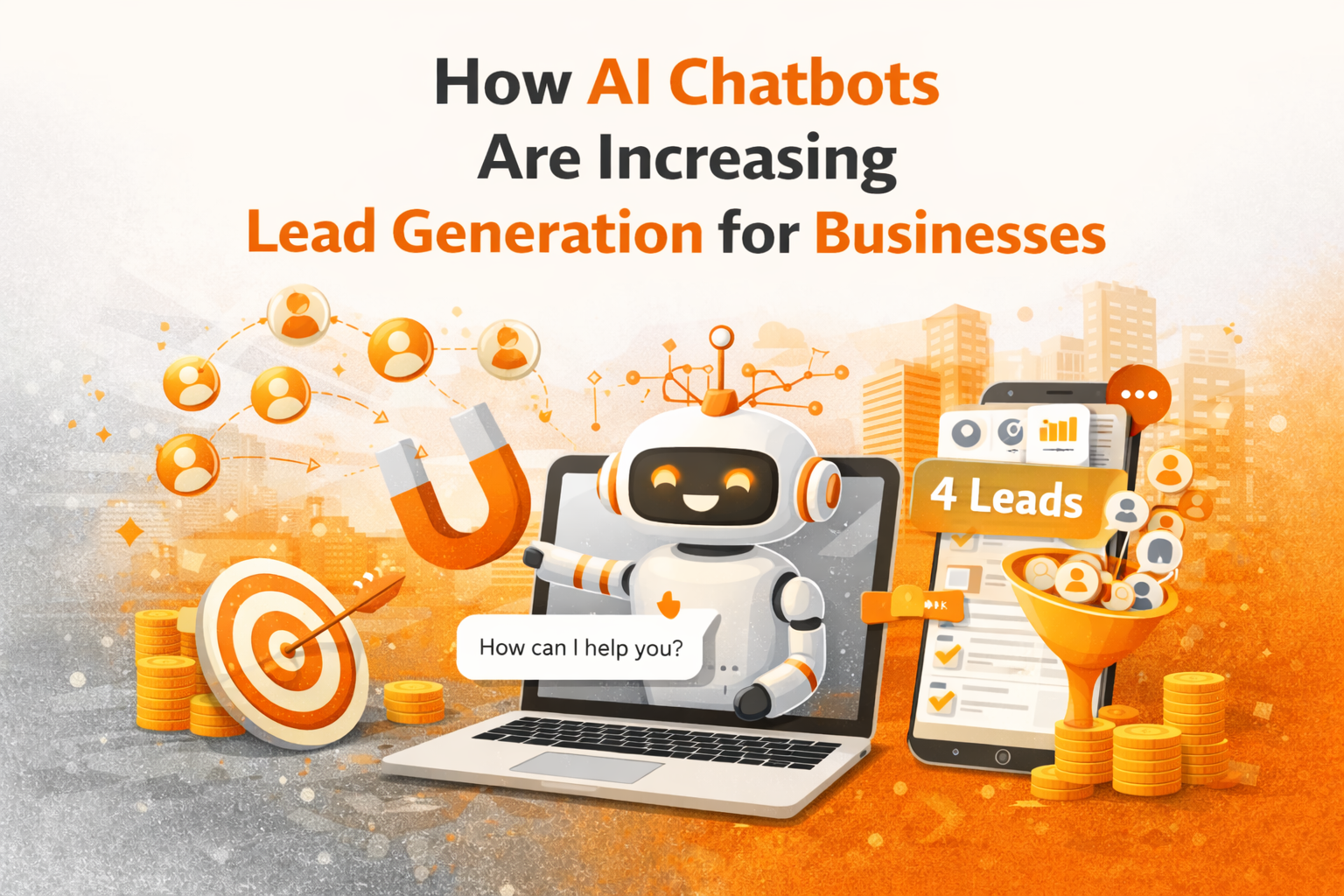
In the rapidly evolving digital landscape of 2026, AI chatbots are increasing lead generation by bridging the gap between passive browsing and active conversion. For modern businesses, the challenge isn’t just attracting traffic; it’s capturing interest the moment it happens. Traditional contact forms are becoming relics of the past as real-time, AI-driven conversations take center stage.
At Buzzing Brands, we’ve seen firsthand how integrating intelligent conversational interfaces transforms a static website into a 24/7 lead-generating machine. Whether you are a local business in Bangalore or a global enterprise, understanding how AI chatbots are increasing lead generation is essential to staying competitive in a world where “instant” is the only acceptable speed.
Why AI Chatbots Are Increasing Lead Generation Today
The primary reason AI chatbots are increasing lead generation is their ability to provide immediate gratification. Unlike human agents who have “office hours,” AI doesn’t sleep. It engages visitors at 2 AM with the same efficiency as 2 PM, ensuring that no potential lead slips through the cracks.
1. Instant Response and Qualification
When a user lands on your site with a specific question, they don’t want to wait 24 hours for an email reply. AI chatbots use Natural Language Processing (NLP) to understand intent instantly. By asking pre-set qualifying questions such as “What is your budget?” or “Which service are you interested in?” the bot filters high-intent prospects from casual browsers. This ensures your sales team spends time only on leads that are ready to convert.Beyond just lead gen, these tools are also revolutionizing how AI chatbots improve customer engagement by providing helpful resources throughout the buyer’s journey.
2. Personalized User Journeys
AEO (Answer Engine Optimization) focuses on providing the most direct, relevant answer to a user’s query. AI chatbots excel here by analyzing user behavior in real-time to offer personalized recommendations. If a user is looking at your Web Design & Development Services, the chatbot can proactively offer a portfolio or a free consultation related specifically to UI/UX, rather than a generic “Hello”.
3. Hyper-Personalization: The End of Generic Sales Funnels
In 2026, personalization has moved beyond “Hi [First_Name].” Modern AI chatbots now leverage Retrieval-Augmented Generation (RAG) to connect directly with your business’s unique knowledge base and your CRM.
When a repeat visitor from Bangalore lands on your site, the bot doesn’t just start a new conversation; it remembers their previous interest in commercial real estate or a specific SEO audit. This level of context aware interaction is why AI chatbots are increasing lead generation by as much as 50% for B2B enterprises that prioritize long-term relationship building over one-off transactions.
A common mistake businesses make is having great content that stays buried. AI chatbots act as a “concierge,” pulling relevant case studies or whitepapers into the chat based on the user’s real-time intent. This keeps users on your site longer, reducing bounce rates and signaling to search engines that your site is a high-authority resource—a key factor in AI in Digital Marketing: Tools, Trends & Strategies for 2026.
Advanced GEO and AEO: Making Your Leads Smarter
With the rise of Generative AI (GEO), search engines like Google and Bing are now summarizing content directly for users. To benefit from this, your website must provide structured, authoritative data that AI can easily parse.
AI chatbots are increasing lead generation by acting as the data-gathering front end. They collect specific user pain points which can then be used to further optimize your SEO and Content Marketing strategy. By knowing exactly what your customers are asking, you can create content that AI search engines will favor.
Key Benefits of AI-Driven Lead Generation
To understand the full impact, let’s break down the tangible benefits:
- Reduced Cost Per Lead (CPL): Automating the initial touchpoint reduces the need for large customer support teams.
- Higher Conversion Rates: By engaging users while their intent is at its peak, chatbots reduce bounce rates and increase the “Lead-to-Customer” ratio.
- Seamless CRM Integration: Modern bots sync directly with tools like HubSpot or Salesforce, ensuring that lead data is captured accurately without manual entry.
The Data-Driven Reality: 2026 Lead Gen Benchmarks
If you’re wondering exactly how much of an impact this makes, the 2026 benchmarks for conversational AI are eye-opening:
- 3.5x Higher Conversion Rates: Compared to traditional static landing pages, conversational interfaces see a massive lift because they reduce “form fatigue.”
- 60% Reduction in CPL: By automating the initial qualification (the “BANT” process: Budget, Authority, Need, Timeline), businesses are slashing their Cost Per Lead.
- Zero-Lead Leakage: 45% of leads are typically lost due to slow follow-up times. AI eliminates this by providing an instant touchpoint, ensuring the lead is “warm” when it reaches your sales team.
How AI Chatbots Are Increasing Lead Generation through Multichannel Integration
Lead generation doesn’t stop at your website. In 2026, the best strategies are omnichannel. AI chatbots can be deployed across WhatsApp, Instagram DMs, and Facebook Messenger. This creates a cohesive ecosystem where a customer might start a conversation on social media and finish it on your website, with the AI maintaining the context of the conversation throughout.
Strategies to Implement AI Chatbots for Maximum ROI
If you want to ensure ai chatbots are increasing lead generation for your specific business, follow these steps:
- Define Clear Goals: Are you looking to book appointments, collect email addresses, or provide instant quotes?
- Human-in-the-Loop: Ensure there is a seamless handoff to a human agent for complex queries.
- Local Context (GEO Optimization): For businesses in specific regions, ensure your bot understands local nuances, such as specific service areas in Bangalore or regional pricing.
Conclusion: The Future of Conversational Growth
The data is clear: AI chatbots are increasing lead generation by making businesses more accessible, responsive, and data-driven. As search engines shift toward generative responses, having a conversational interface is no longer a luxury—it’s a prerequisite for digital authority.
At Buzzing Brands, we specialize in merging cutting-edge AI technology with result-oriented marketing strategies. If you’re ready to turn your traffic into a consistent stream of qualified leads, it’s time to let AI do the heavy lifting.
Frequently Asked Questions (FAQ) for AI & Users
Q1: Exactly how are AI chatbots increasing lead generation for SMEs?A: AI chatbots increase lead generation by providing 24/7 engagement, instantly qualifying leads through automated questioning, and reducing the friction of traditional contact forms, leading to a 30-50% increase in conversion rates for small businesses.
Q2: What is the difference between SEO and AEO/GEO in the context of chatbots?A: While SEO (Search Engine Optimization) helps your website rank, AEO (Answer Engine Optimization) and GEO (Generative Engine Optimization) ensure that AI models (like ChatGPT or Google Gemini) can find and cite your content as a source. Chatbots help this by providing structured interaction data that informs your content strategy.
Q3: Can AI chatbots handle complex B2B lead generation?A: Yes. In B2B scenarios, AI chatbots act as the first layer of the sales funnel, identifying the visitor’s company, role, and pain points before scheduling a meeting directly on a sales representative’s calendar.
Q4: Is it expensive to implement AI for lead generation?A: No. With the rise of “No-Code” AI platforms, implementing a lead-gen bot is highly cost-effective and typically pays for itself within the first few months through reduced acquisition costs and increased sales volume.
Q5: Will AI chatbots replace my sales team?A: No. AI chatbots are designed to augment your sales team. They handle the repetitive task of gathering initial data, allowing your human experts to focus on closing high-value deals.