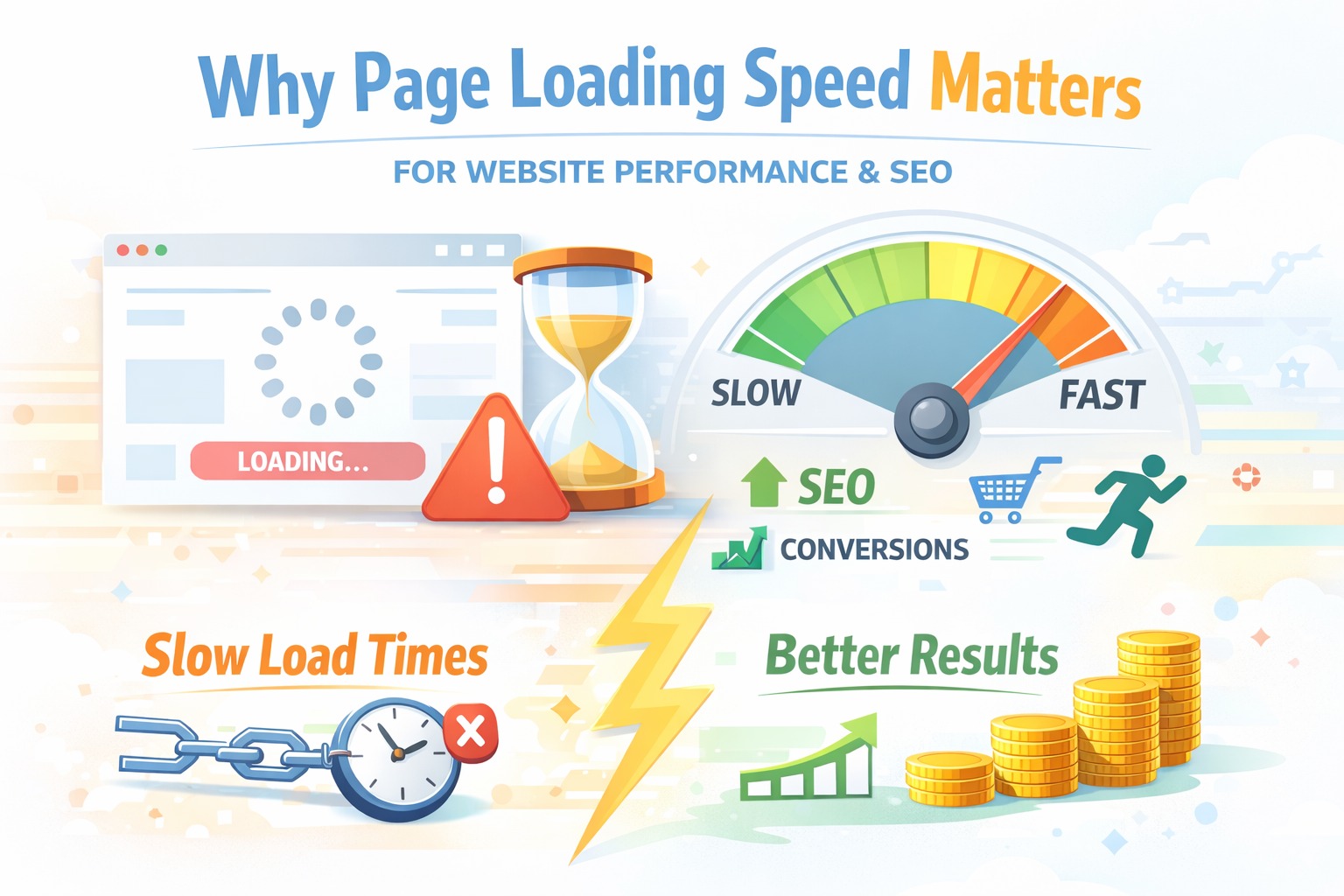
In a digital-first world, users expect websites to load instantly. If a page takes too long to load, users leave—often without giving the brand a second chance. Page loading speed has become a critical factor that directly impacts website performance, user experience, search engine rankings, and conversions.
At Buzzing Brands, we’ve consistently seen that websites with faster loading speeds not only rank better on search engines but also convert more visitors into leads and customers. Page speed is no longer just a technical metric—it’s a business growth factor.
This blog explains why page loading speed matters, how it affects website performance, SEO, and conversions, and what businesses can do to improve it.
What Is Page Loading Speed and Why It Matters
Understanding Page Loading Speed
Page loading speed refers to the amount of time it takes for a web page to fully load and become usable for a visitor. This includes loading:
- Text content
- Images and videos
- Scripts and stylesheets
- Interactive elements
It’s important to differentiate between actual load time and perceived load speed. Even if a page loads fully in a few seconds, users may feel it’s slow if visible elements take too long to appear.
Ideal Page Loading Speed for Modern Websites
According to industry benchmarks:
- Pages should load within 2–3 seconds
- Mobile users expect even faster load times
- Any delay beyond 3 seconds significantly increases bounce rates
Google has also emphasized that fast-loading pages lead to better user satisfaction and engagement.
How Page Loading Speed Impacts Website Performance
Page Loading Speed and User Experience (UX)
User experience is directly tied to how quickly a website loads. When page loading speed is slow:
- Users abandon the page
- Session duration decreases
- Engagement drops
Fast-loading websites create smoother navigation, better interaction, and stronger first impressions. In contrast, slow pages frustrate users and damage brand perception.
How Slow Page Loading Affects Conversion Rates
From a business perspective, page speed has a direct impact on conversions:
- Lead forms are abandoned
- Checkout processes fail
- Calls-to-action are ignored
At Buzzing Brands, we’ve observed that even a one-second improvement in page load time can lead to noticeable increases in conversion rates, especially for service-based and eCommerce websites.
Page Loading Speed and SEO Rankings
How Page Loading Speed Affects SEO
Google considers page loading speed as a ranking factor, especially for mobile search results. Slow websites:
- Rank lower on SERPs
- Get crawled less efficiently
- Lose visibility over time
With mobile-first indexing, Google primarily evaluates the mobile version of a website—making speed optimization even more critical.
Page Loading Speed and Core Web Vitals
Google introduced Core Web Vitals to measure real-world user experience. These include:
- Largest Contentful Paint (LCP): Measures loading performance
- Interaction to Next Paint (INP): Measures responsiveness
- Cumulative Layout Shift (CLS): Measures visual stability
Poor Core Web Vitals scores often indicate slow or unstable page loading, which can negatively impact rankings.
Why Website Performance Depends on Page Loading Speed
Website Performance Metrics Influenced by Page Speed
Page loading speed affects multiple performance indicators, such as:
- Time to Interactive (TTI)
- Bounce rate
- Pages per session
- Conversion rate
A slow website creates friction at every stage of the user journey, reducing overall performance.
Impact of Page Load Time on Mobile Performance
Mobile users are even less tolerant of slow pages. Factors like:
- Slower networks
- Smaller devices
- On-the-go usage
make mobile page loading speed crucial. Websites that are not optimized for mobile performance often lose a significant portion of potential traffic and leads.
Common Causes of Slow Page Loading Speed
Technical Factors Affecting Page Load Time
Some of the most common technical reasons for slow page loading include:
- Unoptimized images
- Heavy JavaScript and CSS files
- Poor server response time
- Lack of browser caching
These issues often go unnoticed but can severely impact website performance.
Design and Content Issues That Slow Down Websites
Design choices also play a major role:
- Large background videos
- Excessive animations
- Third-party plugins and trackers
- Poor font loading strategies
While visually appealing designs matter, performance should never be compromised. A well-planned web design and development approach balances aesthetics, usability, and speed, ensuring websites look great while loading fast across devices.
How to Improve Page Loading Speed for Better Performance
Page Loading Speed Optimization Best Practices
To improve page loading speed, businesses should:
- Compress and properly size images
- Enable browser caching
- Minify CSS, JavaScript, and HTML
- Use a reliable hosting provider
- Implement a content delivery network (CDN)
At Buzzing Brands, we focus on balancing performance with design to ensure speed improvements don’t affect brand experience.
Tools to Measure and Improve Page Loading Speed
Some widely used tools include:
- Google PageSpeed Insights
- Lighthouse
- GTmetrix
These tools help identify issues and provide actionable recommendations to improve page speed.
Page Loading Speed for Business Websites
Why Page Loading Speed Matters for Lead Generation
For businesses investing in SEO, Google Ads, or social media marketing, page loading speed plays a crucial role. Slow landing pages:
- Increase ad costs
- Lower Quality Scores
- Reduce lead conversion rates
Fast-loading pages ensure that marketing efforts translate into real business outcomes.
Page Loading Speed and Brand Trust
Website speed directly affects how users perceive a brand. A fast website signals:
- Professionalism
- Reliability
- Trustworthiness
In contrast, slow websites often appear outdated or unreliable, even if the content is strong.
A high-performing website acts as a brand’s digital foundation, influencing visibility, credibility, and user trust—key elements we explore in depth in our article on how websites shape online presence and brand visibility.
Is Page Loading Speed Worth Investing In?
Cost vs ROI of Page Speed Optimization
While page speed optimization may require technical effort, the long-term benefits include:
- Improved SEO rankings
- Better user engagement
- Higher conversion rates
- Reduced paid advertising costs
The ROI of speed optimization compounds over time, making it one of the most cost-effective improvements for any website.
When Page Loading Speed Optimization Delivers the Best Results
Page speed optimization is especially impactful for:
- High-traffic websites
- Mobile-first audiences
- Lead generation landing pages
- E-commerce platforms
Even small improvements can lead to measurable gains.
Conclusion: Faster Page Loading Means Better Website Performance
Page loading speed is no longer optional—it’s essential for modern website performance. Faster pages improve user experience, strengthen SEO rankings, and increase conversions. Businesses that prioritize page speed gain a competitive advantage by delivering seamless digital experiences. By identifying performance bottlenecks and implementing the right optimizations, websites can transform speed into a powerful growth driver.
About Buzzing Brands
Buzzing Brands is a performance-driven digital marketing agency helping businesses improve website speed, SEO, and conversions through data-backed strategies.
From SEO to performance optimization, we help brands grow with data-driven strategies.
Partner with Buzzing Brands to scale your digital presence
Frequently Asked Questions (FAQs)
What is a good page loading speed?
A good page loading speed is typically under 2–3 seconds for both desktop and mobile devices.
How does page loading speed affect SEO?
Page loading speed is a Google ranking factor and directly influences Core Web Vitals, crawl efficiency, and user engagement.
Does page speed impact mobile users more?
Yes, mobile users are more sensitive to slow load times due to network limitations and usage behavior.
How can I check my website’s loading speed?
You can use tools like Google PageSpeed Insights, Lighthouse, or GTmetrix to measure page speed.
Can page loading speed increase conversions?
Yes, faster page loading reduces bounce rates and improves conversion rates across industries.